
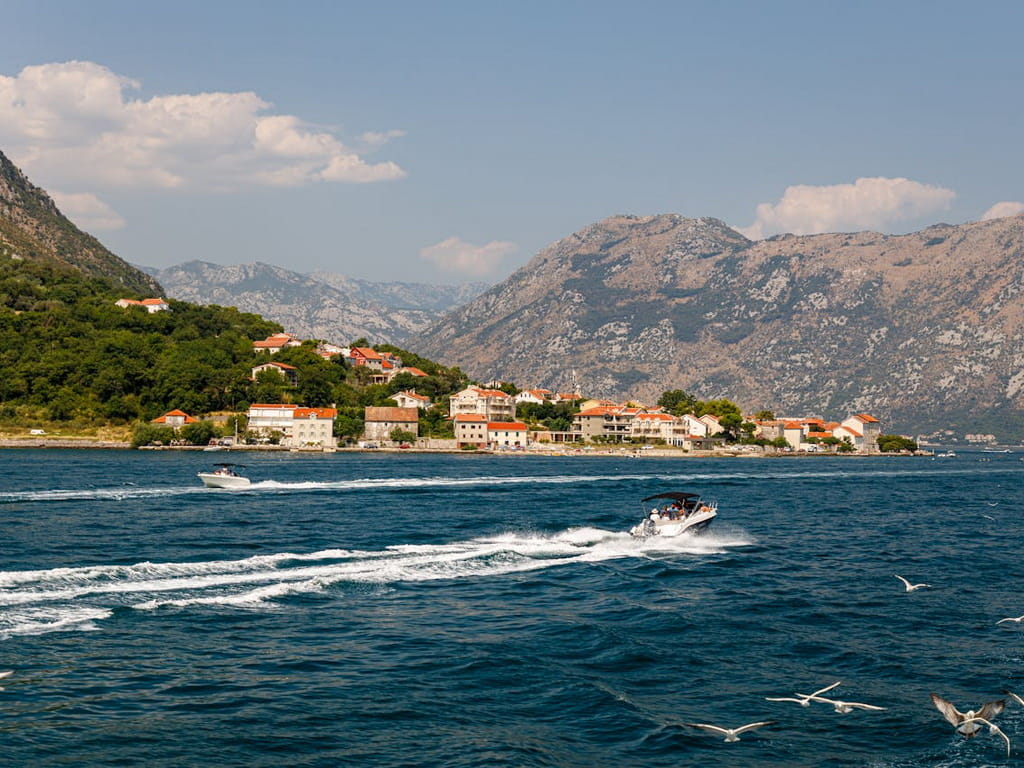
Montenegro in July 2026 – Is it worth going on vacation? Weather in Budva and Tivat, Kotor and Herceg Novi, reviews, water and air temperature, how to dress and what to take with you, prices for air tickets and hotels, excursions? What to do and see in Montenegro in July, where to go with a child – says Eurotraveler.
July is perhaps the first month of summer, when most European beaches really become extremely popular. And the number of vacationers arriving on the shores of the Mediterranean Sea allows us to draw an indisputable conclusion – the swimming season has finally started.
You can say that in June in Europe you can have a good rest at sea. And this is actually true. But the lion’s share of beach tourists either don’t know about this or have their own opinion on this matter.
As for Montenegro, July is really the first high-season month in this country. During which weather very stableis characterized by a large number of dry and hot days and is extremely rarely generous with rain. In short, it creates all the conditions for a serene seaside holiday.
This is on the one hand. On the other hand, the population and hucksters businessmen, naturally, cannot stay away.
And they are trying to pump out more money from tourists according to the scheme “after us there will be a flood.” Despite the fact that the local service and services were not even close to those, for example, in Turkey.
Therefore, before going (buying tickets and booking hotel rooms), a tourist should have a very good idea of what he will actually encounter. And now we will try to help “put the puzzle together.”
Briefly
- What month is best to go to Montenegro? Guidebooks like to say that in July and August. But we – if you are aiming primarily at a beach holiday – recommend choosing June and September for this. Because at the peak of summer there is too much in Montenegro: heat, people, traffic jams, and prices “fly into space”
- Is it possible to swim in Montenegro in July? It is possible, regardless of the year. Because even in the coldest of them the sea, in the Bay of Kotor, in Budva and Becici, Bar, warms up to +25-27 °C
- Where is the best place to relax in summer in Montenegro? Not in Budva or Becici – for sure: it’s noisy, crowded and expensive. You can have a good rest on the Lustica Peninsula, where there are excellent beaches and hotels. And also: in the municipality of Herceg Novi.
Well, now – to the specifics!
Weather in Montenegro in July
It is often extremely sunny and very hot. Moreover, the duration of such periods reaches 2-3 weeks.
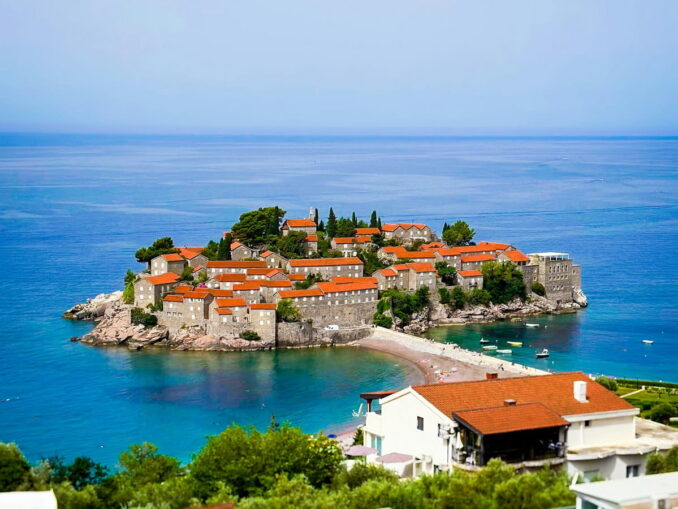
The air temperature on the coast of Montenegro in July in the afternoon rises to +32-38 °C. This amount or approximately this amount will be both in Budva, where, it seems, there is simply nowhere to escape the heat, and in other resorts.
If you think that in July it will be easier in Herceg Novi, supposedly leaning against forested mountains, then you are mistaken. In the sense that it might be easier, but not during the day. And in the evening and very early in the morning (after 9 o’clock it’s simply inappropriate to talk about coolness).
There is also nothing to count on for mercy from the heat in Kotor, which in July is simply overcrowded with cruise tourists, as well as in Tivat. Which is far from happily adjacent to Porto Montenegro, a haven for luxury villas.
It is very hot in July in the capital of Montenegro, Podgorica – air temperatures sometimes rise to +40-41 degrees Celsius. But in the north of the country, in the mountains, in the same Zabljak, at this time it is very rarely happens more than +30 °C.
And if you take the trouble to drive from the coast to the Durmitor National Park (how can you not see the local Black Lake?), you will understand why literally all the good cottages and rooms in Zabljak are booked.
Evenings in July Montenegro are cooler. Air temperatures drop to +26-30 degrees Celsius on the coast and +16-20 °C in the mountains in the north.
So in reviews, sometimes you can find remarks like “the warm blouse was in place” or “the windbreaker came in handy.”
Rains
in Montenegro at the peak of summer they fall almost exclusively in the evening and at night, and are stormy and unrestrained. The duration of thunderstorms and downpours rarely exceeds a couple of hours, but often these natural disasters are visually impressive.
Lightning simply cuts across the sky, illuminating everything for kilometers around. And the rain is pouring down so hard that a flood seems inevitable.
However, holidaymakers are even grateful for local summer thunderstorms. Because they bring, albeit brief, but noticeable relief.
This is all the more significant because the winds blow weakly in July. And they are not able to ventilate the atmosphere effectively enough.
Purely statistically, the volume of precipitation is small – no more than 30-40 mm. But their volley nature makes you wonder: shouldn’t you at least take a raincoat on vacation (an umbrella won’t help in such a situation)?
It is also worthwhile to carefully study the weather forecast for those who travel to Montenegro by personal car. Because there are plenty of places on local roads that, when it rains, flood to such an extent that the water rises to the hood.
Water temperature
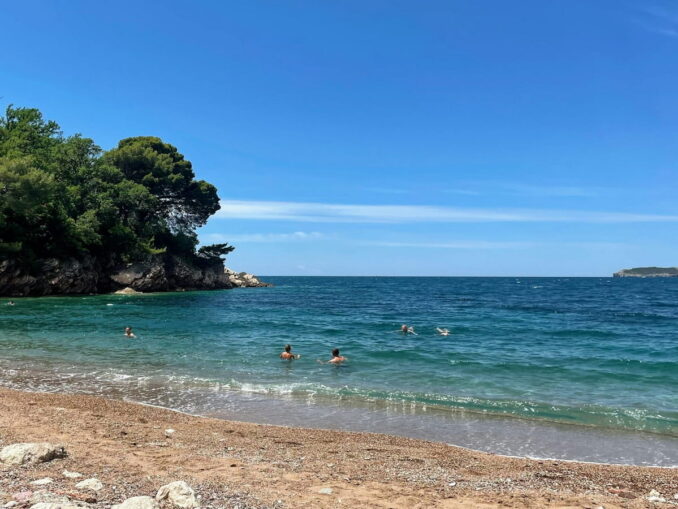
There is no need to fear hypothermia: the Adriatic Sea is warmed up in July in Montenegro to +25-27 degrees Celsius. In the depths of the Bay of Kotor (Perast and Kotor) it can be even warmer. And in shallow water – certainly.
However, the sea is not prone to blooming and maintains transparency throughout the swimming season. And the number of beaches (and water areas near them) that are rated “unsatisfactory” is negligible.
Of course, you shouldn’t completely trust official government services that measure “cleanliness” – they are (to put it mildly) biased. Therefore, try to avoid swimming on the most crowded city beaches. And in general – whenever possible – go to small towns, away from the main tourist attractions.
It is best to swim at this time in the morning before 11 and in the evening, after 17-18 hours. In the middle of the day there is too much chance of getting burned. Well, if not (if you took sunscreen to the sea and used it as intended), then you will receive a dose of solar radiation that cannot be called “healthy”.
Sometimes
– rarely – storms roll into the Montenegrin coast in July, interrupting long periods of extreme heat. After the end of the active phase of such cataclysms, the sea becomes cloudy for a short time.
Coastal municipalities may also suffer: it happens that yachts are torn off their leashes, poorly attached roofs from houses and buildings, and trees collapse on cars. It happens, alas, that people die – gismeteo.by/moshhnyj-shtorm-pronessya-po-chernogorii/.
Prices 2026
At first glance they are not very high. If you monitor prices in hotels, as well as guest houses in Montenegro in July, you will be surprised to discover that they are almost half the Croatian prices. And in general, it’s hardly higher than those set at the peak of the season, for example, in Sochi, Russia.
In particular, for only 80 € per day you can book a tiny, but separate studio with a kitchen at Apartmani Dubravkac near the beach in the town of Rafailovici. It’s much better – just get up and you can already swim.
Yes, we remember that above we advised against a trip to Budva – and Rafailovichi is actually its suburb. But what can you do if very few tourists heed such persuasion?!
If you stop in Herceg Novi, you are unlikely to save money. But for the price indicated above, you can also stay in a (small) room with a view of the sea or the old town and a 5-minute walk from the beach – Apartments Belvedere. Pebble, admittedly, beach. But what can you do – there is a clear shortage of sandy ones in Herceg Novi!
Air tickets from Moscow to, say, Tivat and back at the equator of summer will cost ~70 thousand rubles per person. But from Berlin you can get there for much less money – 12-17 thousand. And, in addition, spending not 15-20 hours on the flight, but only 2!
Transport
In the case of Tivat, to get to the bus station (in Tivat itself), you will have to walk more than a kilometer along the highway – and right along the side of the road, and not along the pedestrian path. From Golubovci Airport regular bus services can take you to the Podgorica bus station. From where, yes, you can continue your bus journey around the country.
Flight schedules (quite up to date) and prices can be found here – busticket4.me/en. By the way, tickets can be bought online. However, this is not enough, since they must also be printed (you can do it at the bus station ticket office for extra money) – otherwise, you will not be allowed on the bus.
It is not surprising that most tourists arriving in Montenegro – especially in hot July – choose a transfer to the hotel. Well, or a rental car (not a very expensive service – from 35-40 € per day).
Which only in theory is a convenient solution to the transportation issue, but not the most justified investment. Since the roads of Montenegro in the summer are very often stuck in traffic jams. Again, the central Tivat-Jaz highway is still being reconstructed in the spring of 2026 and it is far from certain that the work will be completed by the summer season.
So… well, they’re rental cars, it’s better to take a taxi. Well, if you want to see some attraction, there is nothing easier than taking part in a bus excursion. And enjoy the views around (often they are truly magnificent) to the accompaniment of the guide’s story.
Excursions
in Montenegro are not particularly cheap. Especially when it comes to traveling to places quite remote from your location.
The cheapest way is to take part in a boat trip. For example, for a 3-hour cruise along the Bay of Kotor you will have to pay about 35-40 €.
But if you want to take a one-day trip to Durmitor Park, the Tara River Canyon (without rafting), and visit the Ostrog Monastery, you will need to prepare about 90-100 € per person.
- Prices for excursions in Montenegro
Food
The cost of food in Montenegro is not much different from other eurozone countries. You can have breakfast without being too full for 5-6 €, and have a hearty lunch for at least 10-12 €. A modest dinner (main course and salad) with a glass of wine will take you out of your pocket from 20 €.
But products in stores sometimes cost so much that a German or a Frenchman, or even a Briton, will raise their eyebrows in surprise. And the assortment even in supermarkets will greatly disappoint the discerning holiday-goer, since it is frankly meager.
Again, it is difficult to buy fresh vegetables and fruits in stores – although it would seem that in Montenegro, even if you stick a stick into the ground, it will give roots. Equally, despite the abundance of bakeries, local sweets leave much to be desired.
Things to do
First, let’s talk about water parks. There are two of them in Montenegro and both are located in Budva.
Mediteran is located on the territory of the hotel of the same name and has modest dimensions and capabilities in modern times. However, it is suitable for children up to high school age.
For those who intend to receive and are able to digest large portions of adrenaline, water park Budva. Occupying five times the territory and featuring several extreme slides.
Where to go
Previously, we compiled a detailed list of the most interesting places in Montenegro. And, in general, there is nothing to add to it.
Therefore, within the framework of this review, we focus your attention only on the sights that it is simply impossible to see in person once you are in the country. impermissible. Be sure to take a ride along the Bay of Kotor along the highway, stop at several viewpoints, and enjoy panoramic views – this bay is one of the most beautiful in the world
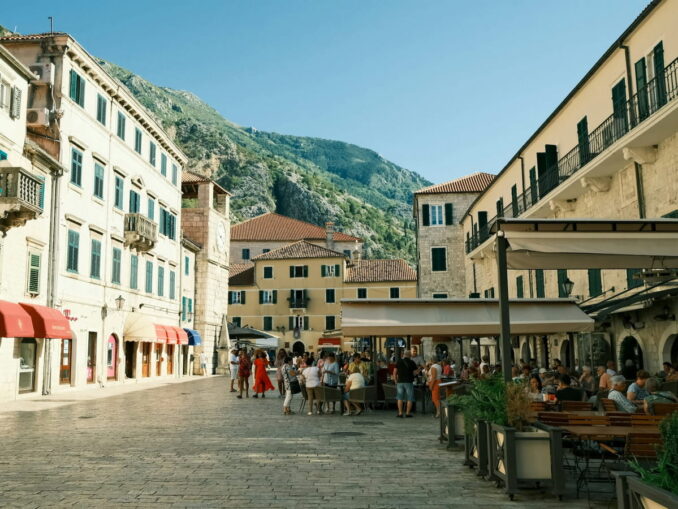
You should definitely visit Kotor – the former stronghold of the Venetians is considered, not without reason, the main tourist attraction of the country. And then stop by cozy Perast. From where short excursions depart to the island of Gospa od Škrpjela, famous for its church.
The beauty of Lake Skadar on the border with Albania beckons. And in July, Durmitor National Park in the north of the country seduces not only with its beauty, but also with much lower air temperatures!
The canyon of the Tara River is incredibly picturesque, along which you can raft by boat and raft. And an excellent view point is the Djurdzhevich Bridge.
© Eurotraveler
